Stickdance Tuber: Fight Melody
Cuongbeo Game StudioMusic
4.440.00 Reviews
- Version
- 1.34
- Installs
- 100.00K
- Age Rating
- Teen
Screenshots
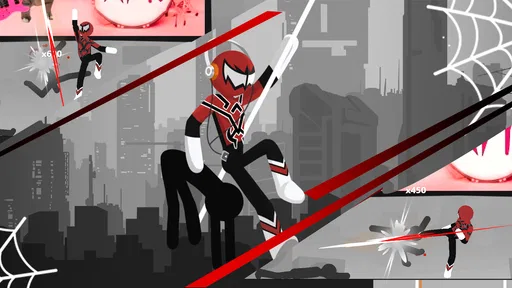
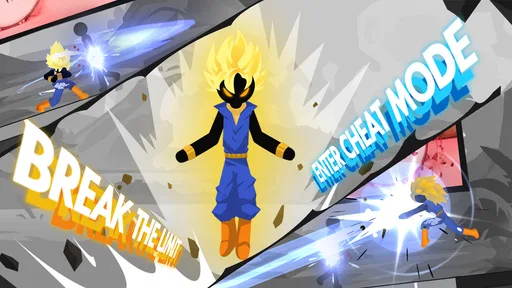
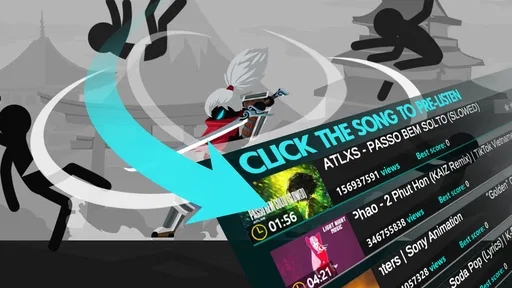
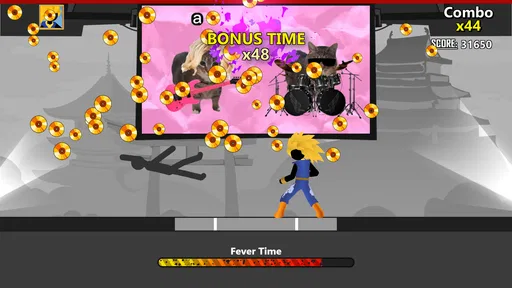
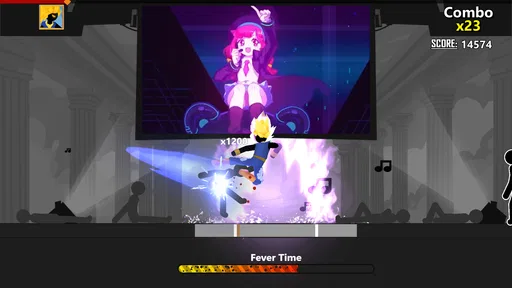
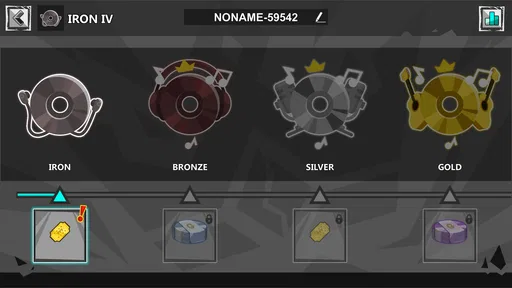
Our Review of Stickdance Tuber: Fight Melody
 Analysis by Appyee
Music games usually ask for one simple thing: listen, react, and keep the rhythm alive. Stickdance Tuber: Fight Melody takes that familiar idea and wraps it in a stick-figure fighting presentation, creating a quick-play experience that feels more active than a standard tap-to-the-beat game. I found it easiest to enjoy in short sessions, when I wanted something energetic without committing to a long story or a complicated strategy system.
Cuongbeo Game Studio presents it as a free music game for Android, with a Teen content rating and support for devices running Android 8.0 or newer. It reached the store on April 18, 2025, and version 1.34 is the build available to players. The game has passed one hundred thousand installs and holds a 4.4 average from more than five hundred ratings, which suggests that its quick musical-action format has found a receptive audience.
That does not mean it is the ideal choice for every player. Someone looking for a deep fighting game, a large rhythm library, or a completely uninterrupted free experience may find the design limited. My impression is more specific: this is a compact, accessible game that works best when you treat each session as a focused burst of timing practice rather than a substitute for a full fighting or music title.
How the everyday play loop feels
The most useful way to approach the game is to establish a simple baseline routine. I start by playing without worrying about perfect results, paying attention to how the musical cues connect with the on-screen action. The first few attempts are less about winning than learning the game’s rhythm language: which moments invite a tap, how quickly the next cue arrives, and how much visual movement appears around the playable action.
That first pass matters because the stick-figure presentation can make the screen feel busier than a traditional rhythm interface. The fighting theme adds motion and personality, but it also means that not every animation deserves equal attention. I get better results when I focus on the actual interaction cue instead of watching every character movement. Once that distinction becomes familiar, the game feels more readable and less hectic.
A practical session can fit into a short break. I might play a few attempts while waiting for an appointment, then stop after noticing one recurring mistake. Rather than immediately restarting again and again, I use the next attempt to correct that single issue. This makes progress feel more deliberate and avoids turning the game into random tapping.
The free entry point is helpful here. You can try the core experience before deciding whether it deserves regular space on your phone. Optional purchases range from $0.99 to $9.49 per item, so I would recommend treating them as a later consideration rather than part of the initial decision. First determine whether the timing and presentation suit you; spending money will not make an unfamiliar rhythm pattern automatically enjoyable.
The Teen rating is also worth keeping in mind for families. The stick-fighting theme gives the game a more combative tone than a purely abstract music app, even though the appeal is still centered on rhythm and reaction. I would let younger players try it only if the rating and the visual style fit your household’s expectations.
Building a repeatable first-session habit
Experienced players can make the opening minutes more useful by following the same sequence each time. I suggest one unhurried attempt to identify the pattern, one attempt focused on clean timing, and then a short review of where mistakes happened. This habit is more valuable than repeatedly pressing through a difficult section without changing anything.
Another helpful approach is to separate recognition from execution. During an early attempt, watch for the order and spacing of cues. On the next one, act on that information instead of trying to memorize every visual detail. Rhythm games often become easier when the player stops treating each input as an isolated surprise and starts seeing the sequence as a phrase.
This is one of the game’s strengths for casual players: the premise is understandable quickly. You do not need to learn a large roster, study equipment, or manage a complicated build before enjoying a round. The trade-off is that players who need long-term strategic variety may eventually feel that timing alone is not enough to keep the experience fresh.
Settings and phone preparation that actually help
Before judging your performance, I would check the available in-game options and your phone’s basic audio behavior. The most important practical question is whether the music and visual cues feel synchronized on your device. If the game offers a timing or audio adjustment, it is worth testing rather than assuming your first result reflects your skill. I would not change several options at once; alter one setting, play the same kind of sequence, and compare how it feels.
Volume is another small but meaningful choice. In a quiet room, sound can provide the clearest guide. In a noisy environment, visual focus becomes more important, and headphones may help if they make the beat easier to follow. I would avoid playing with sound so loud that it becomes tiring, especially during repeated practice sessions. Comfort improves concentration more than sheer volume does.
Screen orientation, touch sensitivity, and notification interruptions can also affect a timing game, even when they are not part of the game itself. I prefer to close distracting apps, keep the phone steady, and avoid playing while walking. A missed input caused by a notification or an awkward grip tells you nothing useful about your ability.
Because the game supports Android 8.0 and newer, it is available to a broad range of Android devices. Still, compatibility is not the same as identical comfort. Smaller screens may make moving action harder to read, while older hardware can make any visually busy music game feel less smooth. If a sequence seems unfair, first check whether the phone is struggling or whether another app is competing for attention.
One useful discipline is to keep your chosen setup consistent. If you practice with headphones, a particular volume, and the phone held in one position, changing all three before a difficult attempt can make the result hard to interpret. Consistency turns each session into a clearer comparison, which is especially useful when you are trying to improve rather than simply pass time.
Using faster patterns without losing control
When the cues become quicker, the natural reaction is to speed up every movement. That is often the wrong adjustment. I get better results by keeping my hands relaxed and allowing the sequence to set the pace. Tension creates rushed taps, and rushed taps make a pattern feel faster than it really is.
Try grouping nearby actions into small phrases instead of counting every input separately. A repeated rhythm can be easier to recognize as a shape: a short run, a pause, then another response. This mental grouping reduces the amount of information you process at once. It is not a hidden feature or a special shortcut; it is simply a more efficient way to read the music-action relationship.
Another advanced habit is to watch slightly ahead of the action you are currently completing. Staring only at the input you just made keeps your attention in the past. Looking toward the next cue gives your brain time to prepare, especially when the game uses quick transitions. The trick is not to look so far ahead that you miss the present instruction.
For difficult sections, I recommend identifying the first point where control breaks down. If the error always appears after a particular transition, practice entering that transition calmly instead of replaying the entire opening with maximum effort. This is a better use of limited time and helps reveal whether the real problem is speed, recognition, or distraction from the fighting animation.
There is also a trade-off between sound-led and screen-led play. Sound can make a repeating rhythm feel natural, but visual cues may be more dependable when the environment is loud. I would switch emphasis according to where you play. A commuter may need to rely more heavily on the screen, while someone playing at home can use the music to anticipate the next movement.
Where the game is strongest compared with alternatives
Compared with a conventional rhythm game built around lanes, notes, or a static music interface, this title has a more animated identity. The stick-fighting presentation gives each successful response a sense of action, which can make short sessions feel more lively. If you enjoy the idea of rhythm expressed through movement rather than a purely musical dashboard, this is the clearest reason to try it.
Compared with a full fighting game, however, the appeal is different. You are not choosing a complex combat style, learning extensive matchups, or building a long-term competitive plan. The musical timing is the center of attention. Players who want strategic battles should look elsewhere, while players who want quick reactions with a fighting-flavored visual layer may find this lighter approach refreshing.
It also differs from a music player or a passive listening app in an important way: the music is something you respond to, not merely something you consume. That makes it useful for a short mental reset, but less suitable when you want to relax without concentrating. I would choose a music app for background listening and this game when I want the beat to demand my attention.
The 4.4 average from roughly five hundred forty ratings is encouraging, but I would interpret it as a sign of broad appeal rather than proof that every player will enjoy the same experience. Music taste, reaction-game tolerance, screen size, and expectations all matter. A person who dislikes repetition may lose interest sooner than someone who enjoys refining the same pattern until it feels clean.
Limits that become clearer with regular play
The biggest limitation is the narrowness that can accompany a focused rhythm-action design. Once the basic interaction is familiar, the experience depends heavily on how much you enjoy improving timing and replaying patterns. If you need a large progression system or constant mechanical surprises, the game may not provide enough variety for long sessions.
The fighting theme can also compete with clarity. Motion makes the presentation more entertaining, but visual energy is not always helpful when you are trying to read a precise cue. I would not call this a reason to reject the game; it is simply a reason to play with attention centered on the interaction rather than the spectacle.
Free games with optional purchases require a little self-control as well. Since individual in-app items cost between $0.99 and $9.49, I would decide beforehand whether you are comfortable spending anything. The sensible workflow is to play the free version long enough to understand your enjoyment, then consider a purchase only if it addresses a clear personal preference rather than frustration after a poor attempt.
Players concerned about device comfort should also be realistic about session length. Repeated fast inputs can become tiring, particularly on a small phone or when playing with an awkward grip. Short, focused sessions are not merely convenient; they can preserve accuracy and make the game feel more responsive. When your hands are tense, stopping for a while is often more useful than forcing another run.
Those limits explain who should skip it. I would not recommend it to someone seeking a story-heavy adventure, a serious competitive fighter, or a broad music collection with extensive customization. I would also suggest caution for players who become frustrated by repeating a section. The game rewards patience and pattern recognition more than impulsive speed.
Who will get the most from it
This is a good fit for people who enjoy music games but want a stronger visual hook than falling notes or simple buttons. It suits players who like testing reaction time in short bursts, especially those who enjoy the playful contrast between stick-figure combat and musical timing. It is also approachable for someone who does not normally play fighting games but likes the energy of that style.
For an everyday example, imagine having ten minutes before leaving for work. You can play one exploratory attempt, identify the section that caused trouble, and spend the next attempt focusing only on that transition. That is a realistic use case because the game does not require you to prepare a character or remember a complex control system before starting. It gives the break a clear goal without demanding a full evening.
It can also work as a warm-up before other reaction-based games. The useful transfer is not a specific move or character skill, but the habit of looking ahead, staying relaxed, and responding to a pattern rather than panicking at individual cues. I would treat that as a personal training benefit, not as a promise that it directly improves performance elsewhere.
For families, the Teen rating means the decision should include the game’s fighting presentation, not just its musical category. For adults who want something free to sample, the low barrier is attractive. For dedicated rhythm players, the decision depends on whether the stick-fight framing adds enough personality to justify a simpler format than more specialized alternatives.
My verdict after settling into its rhythm
After using a consistent routine, checking the phone setup, and treating fast sequences as grouped patterns, I see the game as a focused music-action title rather than a complete all-purpose game. Its best moments come when the beat, the cue, and the stick-figure movement line up, giving a simple response the feeling of a small combat exchange.
Cuongbeo Game Studio has made something easy to sample and distinctive enough to stand apart from a plain rhythm interface. The free price makes trying it straightforward, while the Teen rating and optional purchases are worth considering before recommending it to younger players or spending beyond the initial experiment. Version 1.34 is a sensible point at which to judge the current experience on a compatible Android device.
My recommendation is clear but limited: try it if you want quick musical challenges with a fighting-game flavor, and approach it with a repeatable practice habit rather than frantic tapping. Skip it if you need deep combat strategy, a huge song-focused ecosystem, or endless variety. The game works best when you value clean timing, short sessions, and the satisfaction of turning a messy pattern into a controlled performance.
Verdict
Strengths of Stickdance Tuber: Fight Melody
- Simple controls make it easy to start playing quickly.
- Rhythm-based combat adds variety beyond standard fighting games.
- Short battles suit quick gaming sessions.
- Colorful visuals give the game a playful, energetic style.
- Unlockable content provides goals for continued play.
Limitations of Stickdance Tuber: Fight Melody
- Timing can feel inconsistent on some songs or devices.
- Gameplay may become repetitive after extended sessions.
- Progression can depend heavily on repeated grinding.
- Ads may interrupt the experience between battles.
- Small buttons can be uncomfortable on phones with compact screens.
Similar Picks in This Category
View All
Tiles Hop Music & Ball Game
AMANOTES PTE. LTD.4.3

Magic Tiles 3™ - Piano Game
AMANOTES PTE. LTD.4.6

Real Piano
Bilkon3.7

Piano Game: Classic Music Song
Dream Tiles Piano Game Studio4.0

Smash Colors: Music Ball Rush
BADSNOWBALL HONGKONG LIMITED4.2

Piano Music Go-EDM Piano Games
Joy Journey Music Games4.5
Frequently Asked Questions
What is Stickdance Tuber: Fight Melody?
Stickdance Tuber: Fight Melody is a rhythm-based action game that combines musical timing with stick-figure combat. Players control a character through energetic stages, following the beat while attacking opponents and avoiding hazards. Its appeal comes from the simple controls, colorful presentation, and fast gameplay, making it suitable for short sessions as well as longer attempts to improve scores and complete more challenging levels.
How do you play Stickdance Tuber: Fight Melody?
Gameplay is built around tapping or using on-screen controls at the correct moment. As music and visual cues guide you, you must perform attacks, movements, or defensive actions in time with the rhythm. Precision is important because mistimed inputs can reduce your performance or leave the character vulnerable. The early stages are relatively accessible, but later levels require faster reactions and closer attention to the beat.
Is Stickdance Tuber: Fight Melody free to download?
The game can generally be downloaded without an upfront purchase, although availability and pricing may differ between Android and iOS stores or by region. Like many free mobile games, it may include optional advertisements, rewarded videos, or in-app purchases. Before installing, it is worth checking the store listing for current details about optional items, advertising, and whether any content is restricted behind payments.
Does Stickdance Tuber: Fight Melody require an internet connection?
An internet connection may be useful for displaying advertisements, receiving updates, synchronizing progress, or accessing certain online features. However, the core rhythm-combat stages may work offline after the necessary game files have been installed. Offline behavior can vary depending on the device and version, so players should test the game in airplane mode if reliable access without Wi-Fi or mobile data is important to them.
Is Stickdance Tuber: Fight Melody suitable for children?
The game uses stylized stick-figure action rather than realistic violence, which may make it more approachable for younger players. Nevertheless, parents should review the age rating, advertising policy, and in-app purchase settings before allowing children to play. Fast rhythm sections can also become challenging, and some versions may display third-party ads, so parental controls are recommended when the game is installed on a child’s device.
Play our best games!


